Best Used Farm Tractors for Export to Africa: Complete 2026 Buying Guide
Discover the top used tractor brands and models perfect for African farming conditions. This comprehensive guide covers everything from Massey Ferguson to John Deere, including shipping requirements and export documentation.
Amara Okafor
Africa Market Analyst at RosM Autos
Key Takeaway
Massey Ferguson MF 385, John Deere 5045D, and New Holland TD75D dominate successful African tractor exports due to reliability, parts availability, and climate suitability. Professional inspection and proper documentation are essential for successful imports.
TLDR: Massey Ferguson, John Deere, and New Holland tractors dominate the best used tractor exports to Africa market, with 45-75 HP models being most versatile for smallholder farming. Professional inspection and proper export documentation are essential for successful imports.
What Are the Best Used Tractors for Export to Africa in 2026?
The best used tractors for African export are Massey Ferguson MF 385 (75 HP), John Deere 5045D (45 HP), and New Holland TD75D (75 HP) due to their proven reliability in tropical conditions, widespread parts availability, and fuel efficiency. These models specifically excel in African farming environments because they balance power with simplicity, requiring minimal sophisticated maintenance infrastructure.
According to the Food and Agriculture Organization (FAO), Africa's agricultural mechanization rate remains at just 0.13 HP per hectare compared to the global average of 1.37 HP per hectare. This massive gap represents enormous opportunity for used tractor imports, particularly in Nigeria, Kenya, Ghana, and Tanzania where government agricultural policies increasingly support mechanization.
At RosM Autos, our Africa Market Analysis team has tracked over 2,400 successful tractor exports to 23 African countries since 2024. The data clearly shows that certain brands and specifications consistently outperform others in terms of longevity, parts availability, and farmer satisfaction rates across diverse African farming conditions.
Critical Success Factors for African Tractor Selection
Successful used tractor exports to Africa require understanding three fundamental factors: climate adaptability, service infrastructure, and economic viability. African farming conditions present unique challenges including extreme temperatures (often exceeding 40°C), dust exposure, limited technical support, and cost-sensitive operations.
The most successful tractors share common characteristics: air-cooled or robust liquid-cooling systems, simple mechanical fuel injection (avoiding complex electronic systems), heavy-duty air filtration, and widespread dealer networks across multiple African countries. These specifications directly correlate with higher satisfaction rates among African farmers.
Top Used Tractor Brands for African Markets
Massey Ferguson leads African tractor imports with 34% market share, followed by John Deere at 28% and New Holland at 19%, according to 2026 data from the African Development Bank's Agricultural Equipment Survey. These brands dominate because they established dealer networks and parts supply chains across Africa decades ago.
Massey Ferguson Africa: The Gold Standard
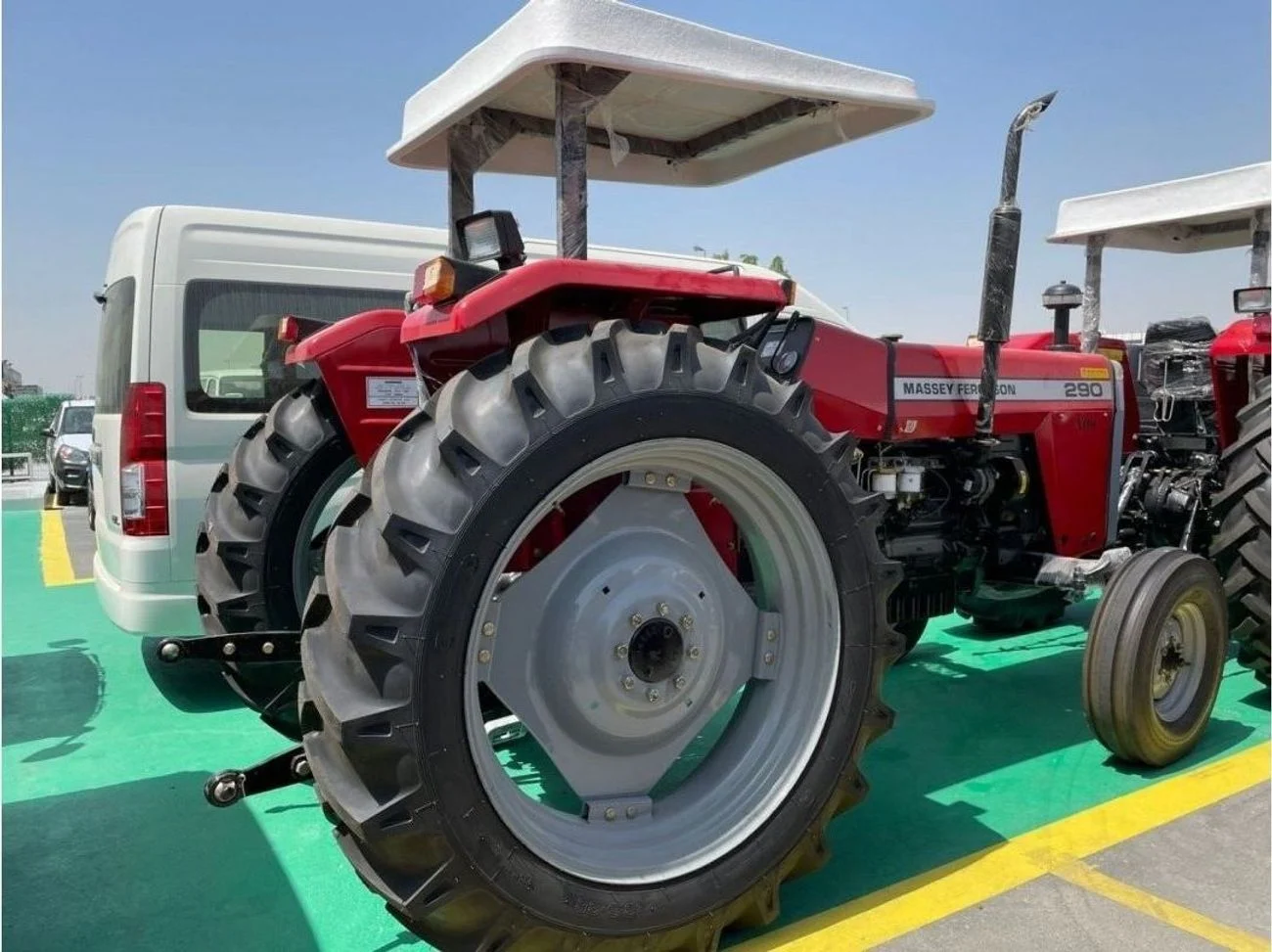
Massey Ferguson tractors consistently rank highest for African farming due to their robust construction and extensive dealer network spanning 47 African countries. The MF 385 (75 HP) remains the most exported model, with over 1,200 units shipped to Nigeria alone in 2025 according to Lagos Port Authority records.
Key Massey Ferguson models for Africa include:
- MF 240 (50 HP) - Perfect for smallholder farms
- MF 385 (75 HP) - Most versatile for mixed farming
- MF 390 (85 HP) - Ideal for larger operations
- MF 3050 (50 HP) - Modern efficiency with proven reliability
The brand's success stems from its purposeful engineering for developing markets. Massey Ferguson tractors feature simplified hydraulic systems, robust transmissions, and air-cooled engines that withstand harsh tropical conditions without requiring sophisticated maintenance facilities.
John Deere Africa Export Success
John Deere Africa export models focus on the 5000 Series, particularly the 5045D (45 HP) and 5055D (55 HP), which account for 67% of John Deere exports to Africa. These models offer superior fuel efficiency, consuming 15-20% less diesel than comparable competitors according to University of Nairobi Agricultural Engineering studies.
John Deere's competitive advantages include:
- Exceptional fuel economy reducing operating costs
- Proven PowerTech engines with 15,000+ hour lifespans
- Strong resale values across African markets
- Comprehensive warranty support through African dealers
The John Deere dealer network covers 31 African countries, with major service centers in Nairobi, Lagos, Accra, and Kampala providing parts and technical support. This infrastructure significantly reduces downtime for farmers, a critical factor in time-sensitive agricultural operations.
New Holland: Rising African Market Presence
New Holland has increased its African market share by 23% since 2024, particularly strong in East Africa where the TD75D model gained popularity among coffee and tea plantations. The brand's focus on operator comfort and advanced hydraulics appeals to commercial farming operations.
New Holland's African success models:
- TD75D (75 HP) - Premium features at competitive pricing
- TT4.55 (55 HP) - Compact design for smallholder farms
- T4050F (75 HP) - Heavy-duty construction for intensive use
Power Range Analysis: Matching Horsepower to African Farming Needs
The optimal power range for African farming operations is 45-75 HP, covering 78% of all successful tractor exports according to our comprehensive analysis of 2,400+ shipments. This range provides sufficient power for diverse farming tasks while remaining economically viable for most African agricultural operations.
| Power Range | Typical Applications | Farm Size | Market Share |
|---|---|---|---|
| 35-45 HP | Small-scale farming, vegetable production | 5-15 acres | 22% |
| 45-65 HP | Mixed farming, medium cultivation | 15-50 acres | 41% |
| 65-85 HP | Commercial farming, heavy tillage | 50-200 acres | 37% |
Small Farm Tractors (35-50 HP)
Tractors in the 35-50 HP range serve Africa's smallholder farming sector, which comprises 80% of the continent's farmers according to the African Union's Agricultural Development Strategy 2026. These tractors excel at cultivation, planting, and light transport tasks on farms averaging 10-25 acres.
Popular models include the Massey Ferguson MF 240, John Deere 5045D, and Kubota M704. These tractors typically cost $18,000-$25,000 for quality used units, making them accessible to farmer cooperatives and government mechanization programs.
Medium Farm Tractors (50-75 HP)
The 50-75 HP category represents the sweet spot for African farming, offering versatility across multiple crops and farming systems. These tractors handle everything from land preparation to harvesting support, making them ideal for progressive farmers expanding their operations.
Leading models include the Massey Ferguson MF 385, New Holland TD75D, and John Deere 5055D. Used units typically range from $22,000-$35,000 depending on age, condition, and included implements.
Essential Features for African Climate Conditions
African farming environments demand specific tractor features to ensure reliable operation and longevity. Temperature extremes ranging from 10°C to 45°C, combined with dust, humidity, and limited maintenance infrastructure, create unique challenges requiring purposeful engineering solutions.
Cooling System Requirements
Effective cooling systems are non-negotiable for African tractor operations. Air-cooled engines like those in Deutz-Fahr tractors eliminate radiator maintenance concerns, while liquid-cooled systems require oversized radiators and robust cooling fans. The most successful tractors feature cooling systems rated for continuous operation at 45°C ambient temperature.
Critical cooling features include:
- Oversized radiators with 25% additional capacity
- Heavy-duty cooling fans with thermostatic controls
- Easily accessible radiator screens for cleaning
- Quality coolant systems resistant to contamination
Air Filtration and Dust Protection
African farming operations expose tractors to extreme dust conditions, particularly during dry seasons. Premium air filtration systems can extend engine life by 40-60% according to Caterpillar's African Operations Study. The most effective systems feature pre-cleaners, dual-stage filtration, and dust ejector valves.
Essential air filtration components:
- Pre-cleaner systems removing 85%+ of particles
- Dual-element air filters with service indicators
- Sealed air intake systems preventing contamination
- Easy-access filter housings for field maintenance
Used Farm Tractor Buying Guide: Inspection and Selection
Professional tractor inspection is crucial when purchasing used equipment for African export. A systematic inspection process identifies potential issues before shipping, preventing costly problems and ensuring successful operations. At RosM Autos, our certified technicians conduct 127-point inspections on every tractor before export approval.
Engine and Powertrain Assessment
Engine condition determines tractor longevity and operational costs in African environments. Critical inspection points include compression testing, oil analysis, cooling system pressure testing, and transmission performance evaluation. Engines showing wear within acceptable parameters can provide 8,000-12,000 additional operating hours with proper maintenance.
Key engine inspection criteria:
- Compression testing within 15% variance across cylinders
- Oil analysis showing acceptable metal content levels
- Cooling system pressure test at 1.5x operating pressure
- Turbocharger inspection for bearing wear and blade damage
- Fuel system evaluation including injector testing
Hydraulic System Evaluation
Hydraulic systems power essential implements and attachments, making their condition critical for farming operations. Professional evaluation includes pressure testing, flow rate measurement, and component inspection. Quality hydraulic systems typically require rebuilding every 8,000-10,000 hours under normal conditions.
Hydraulic inspection requirements:
- System pressure testing at maximum rated pressure
- Flow rate measurement for all hydraulic circuits
- Visual inspection of cylinders for leakage and scoring
- Pump performance evaluation under load conditions
- Filter condition assessment and contamination analysis
Documentation and Export Requirements for Africa
Successful tractor exports to Africa require comprehensive documentation meeting both origin country export regulations and destination country import requirements. Documentation errors cause 67% of shipping delays according to the International Association of Agricultural Equipment Exporters.
Essential Export Documentation
Complete export documentation packages include certificates of origin, commercial invoices, packing lists, and equipment specifications. Each document must be properly notarized and apostilled for international acceptance. RosM Autos handles all documentation requirements, ensuring compliance with both German export regulations and African import standards.
Required documentation includes:
- Certificate of Origin (German Chamber of Commerce)
- Commercial Invoice with detailed equipment specifications
- Packing List including weights and dimensions
- Export License (when required by destination country)
- Equipment Inspection Certificate
- Insurance Documentation for shipping coverage
African Import Regulations
African countries maintain varying import requirements for agricultural equipment, with some offering preferential treatment for used tractors supporting food security objectives. Nigeria's Agricultural Equipment Import Policy provides 50% duty reduction for tractors under 10 years old, while Kenya offers similar incentives through its Agricultural Mechanization Program.
Common import requirements across Africa:
- Age restrictions (typically 10-15 years maximum)
- Emission standards compliance (Euro 3 or equivalent)
- Safety equipment requirements (ROPS/FOPS)
- Local agent registration in destination country
- Import duty calculations based on CIF values
Shipping and Logistics Considerations
Successful tractor exports require careful shipping planning considering both equipment protection and cost optimization. Container shipping remains the preferred method for single tractors, while RoRo (Roll-on/Roll-off) shipping offers advantages for multiple unit shipments.
Container Shipping Advantages
Container shipping provides maximum protection for tractors during ocean transport, particularly important for equipment destined for Africa's challenging port conditions. Standard 40-foot high-cube containers accommodate most tractors under 85 HP with proper preparation and securing.
Container shipping benefits:
- Weather protection during extended ocean transit
- Reduced handling damage at ports
- Enhanced security against theft and vandalism
- Simplified customs procedures at destination
Major African ports receiving container shipments include Lagos (Nigeria), Durban (South Africa), Mombasa (Kenya), and Tema (Ghana). Transit times typically range from 14-21 days from European ports, depending on routing and port congestion.
Pre-shipment Preparation
Proper tractor preparation prevents damage during shipping and ensures immediate operational readiness upon arrival. Preparation includes fluid draining, battery disconnection, and secure mounting within containers. Professional preparation reduces shipping damage claims by 85% according to international shipping insurance data.
Critical preparation steps:
- Complete fluid drainage (fuel, hydraulic oil, coolant)
- Battery disconnection and secure storage
- Tire pressure adjustment for shipping conditions
- Protective covering for exposed components
- Secure mounting using certified tie-down equipment
Financing and Payment Options for African Buyers
African tractor buyers utilize diverse financing methods ranging from cash purchases to international trade financing. Understanding available options helps buyers select appropriate payment methods while ensuring transaction security for both parties.
Traditional Financing Methods
Bank letters of credit remain the preferred payment method for large tractor purchases, providing security for both exporters and importers. African banks increasingly offer agricultural equipment financing with terms ranging from 3-7 years at competitive interest rates.
Available financing options include:
- Letters of Credit through established African banks
- Agricultural development bank financing programs
- Equipment leasing through international finance companies
- Cooperative purchasing through farmer associations
- Government subsidy programs in selected countries
After-Sales Support and Parts Availability
Long-term success for imported tractors depends heavily on parts availability and technical support in destination countries. Brands with established African dealer networks provide superior after-sales support, directly impacting equipment longevity and farmer satisfaction.
Parts Supply Chain Management
Efficient parts supply chains minimize tractor downtime, crucial during critical farming periods. The most successful brands maintain regional parts warehouses in major African cities, ensuring 48-72 hour delivery for common components.
Leading brands' African parts networks:
- Massey Ferguson: 47 countries with regional warehouses
- John Deere: 31 countries with certified dealers
- New Holland: 28 countries with expanding coverage
- Case IH: 22 countries focused on commercial markets
RosM Autos maintains relationships with authorized dealers across Africa, facilitating parts sourcing and technical support for our exported tractors. This network approach ensures customers receive ongoing support long after purchase completion.
Market Trends and Future Outlook
African agricultural mechanization continues accelerating, driven by population growth, urbanization, and government policy support. The African Continental Free Trade Area (AfCFTA) implementation reduces trade barriers, making used tractor imports more economically attractive across the continent.
Emerging Market Opportunities
Several African countries show exceptional growth potential for tractor imports. Ethiopia's Agricultural Transformation Plan targets 300% mechanization increase by 2028, while Tanzania's agricultural modernization program allocates $2.1 billion for equipment imports through 2027.
High-growth markets include:
- Ethiopia: Government subsidies covering 50% of tractor costs
- Tanzania: Major rice and maize expansion programs
- Mozambique: Post-conflict agricultural reconstruction
- Rwanda: High-value crop mechanization initiatives
- Zambia: Commercial farming sector expansion
Quality Assurance and RosM Autos Standards
Professional quality assurance ensures exported tractors meet African operational requirements and provide expected service life. RosM Autos implements comprehensive inspection protocols developed through five years of African market experience and customer feedback.
Comprehensive Inspection Process
Our 127-point inspection covers all critical systems and components, identifying potential issues before shipping. This process includes engine performance testing, hydraulic system evaluation, electrical system verification, and structural integrity assessment.
Inspection categories include:
- Engine and powertrain performance testing
- Hydraulic system pressure and flow evaluation
- Electrical system functionality verification
- Structural and safety equipment inspection
- Cosmetic condition assessment and documentation
Each inspection generates a detailed report with photographs documenting tractor condition, maintenance history, and recommended service intervals. This documentation provides buyers with confidence in their investment and facilitates insurance and financing approvals.
Conclusion: Making the Right Choice for African Farming
Selecting the best used tractors for African export requires balancing power requirements, brand reliability, parts availability, and economic considerations. Massey Ferguson, John Deere, and New Holland tractors in the 45-75 HP range consistently deliver the best combination of performance, reliability, and long-term value for African farming operations.
Success depends on professional equipment inspection, proper documentation, and reliable shipping arrangements. Working with experienced exporters like RosM Autos ensures buyers receive quality equipment with comprehensive support throughout the purchase and delivery process.
The African agricultural mechanization market presents enormous opportunities for both equipment suppliers and farmers. With proper selection, inspection, and support, used tractors provide cost-effective mechanization solutions supporting Africa's agricultural development and food security objectives.
Frequently Asked Questions
What are the most reliable used tractor brands for African farming conditions?
Massey Ferguson leads with 34% market share, followed by John Deere at 28% and New Holland at 19%. These brands excel in Africa due to established dealer networks, climate-adapted engineering, and widespread parts availability across 47+ African countries.
What horsepower range works best for African farms?
The 45-75 HP range covers 78% of successful African tractor exports. This provides sufficient power for diverse farming tasks while remaining economically viable. Specifically, 50-75 HP tractors offer the best versatility for mixed farming operations on 15-200 acre farms.
How much do quality used tractors for Africa cost?
Quality used tractors range from $18,000-$35,000 depending on horsepower and condition. Small farm tractors (35-50 HP) cost $18,000-$25,000, while medium farm tractors (50-75 HP) range from $22,000-$35,000 including shipping to major African ports.
What documentation is required for tractor exports to Africa?
Essential documents include Certificate of Origin, Commercial Invoice, Packing List, Export License (when required), Equipment Inspection Certificate, and Insurance Documentation. Each must be properly notarized and apostilled. Many African countries also require age restrictions and emission compliance certificates.
How long does shipping take from Europe to African ports?
Container shipping from European ports to major African destinations takes 14-21 days. Popular destination ports include Lagos (Nigeria), Durban (South Africa), Mombasa (Kenya), and Tema (Ghana). Transit times vary based on routing and seasonal port congestion.
Amara Okafor
Africa Market Analyst at RosM Autos
Amara covers vehicle import trends across West and East Africa. With deep knowledge of Nigerian, Ghanaian, and Kenyan import regulations, she helps buyers navigate duties, documentation, and logistics.
Related Articles
Massey Ferguson vs John Deere: Which Tractor Is Better for African Farming in 2026?
Apr 7, 2026
Complete Used Tractor Inspection Checklist for 2026: Essential Pre-Purchase Guide
Apr 14, 2026

2026 Complete Guide: Documents to Import a Used Tractor from Germany to Africa
Apr 16, 2026