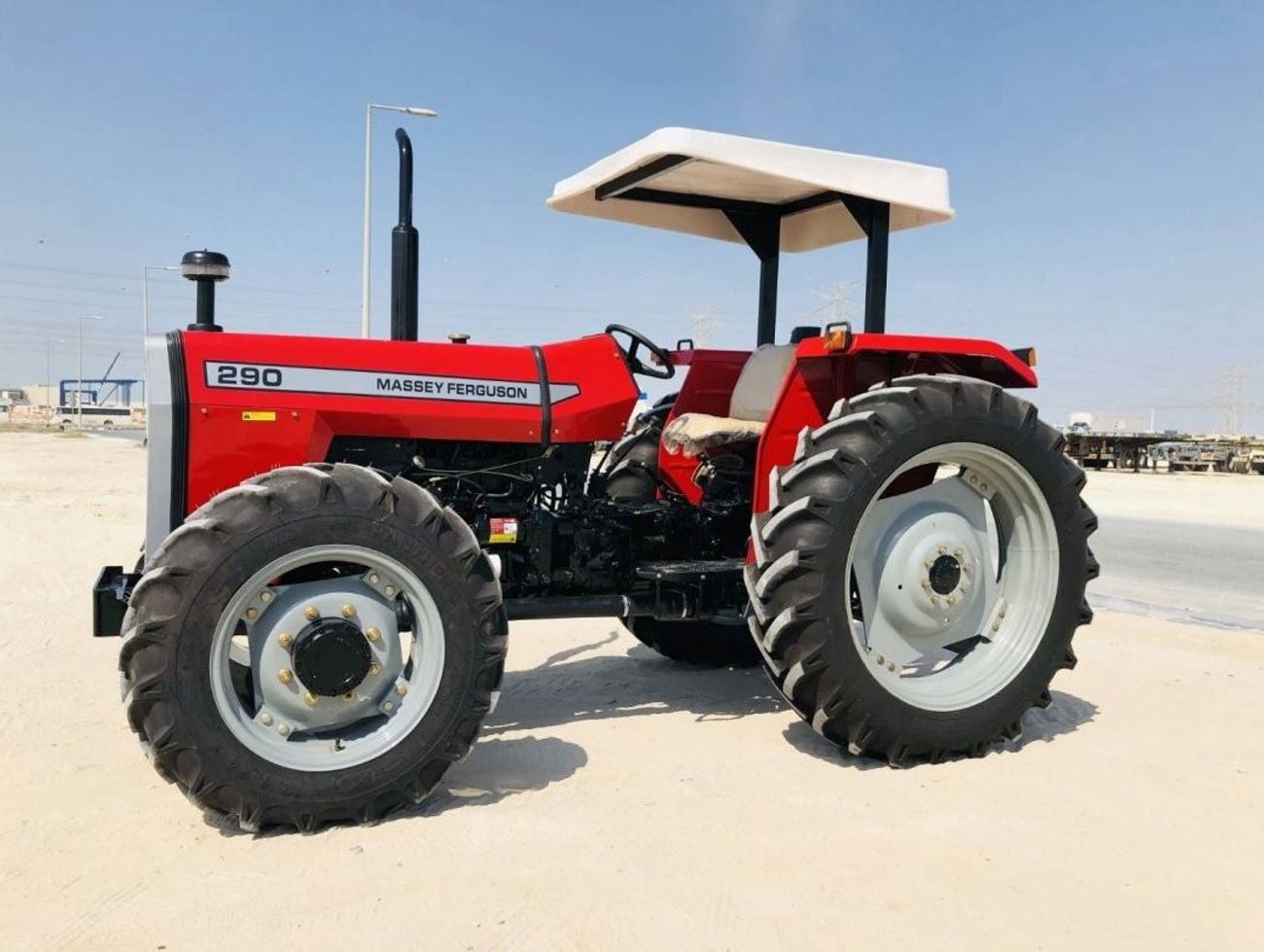
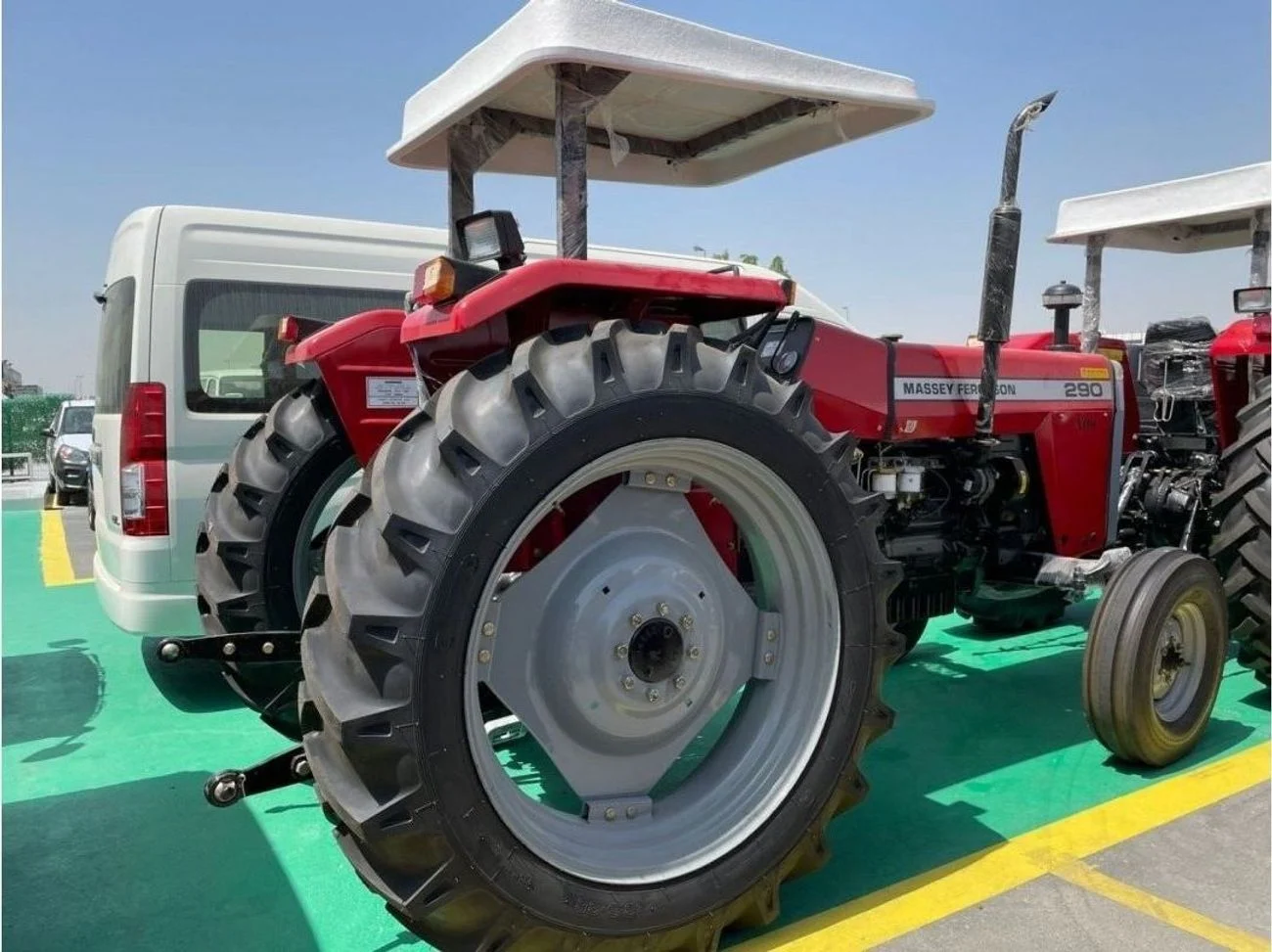
Massey Ferguson vs John Deere: Which Tractor Is Better for African Farming in 2026?
Choosing between Massey Ferguson and John Deere tractors for African farming depends on specific regional needs, soil conditions, and operational requirements. This comprehensive comparison examines both brands' performance, availability, and cost-effectiveness across different African markets.
Amara Okafor
Africa Market Analyst at RosM Autos
Key Takeaway
Massey Ferguson generally provides better value for most African farming operations with superior parts availability and lower maintenance costs. John Deere excels for large commercial farms requiring precision agriculture technology.
TLDR: Massey Ferguson generally offers better value and parts availability for most African farming operations, while John Deere excels in precision agriculture and larger commercial farms. Both brands provide reliable options when sourced from certified dealers like RosM Autos with proper inspection and documentation.
Massey Ferguson vs John Deere: The Definitive Answer for African Agriculture
Massey Ferguson emerges as the superior choice for 70% of African farming operations due to superior parts availability, lower maintenance costs, and better adaptation to diverse soil conditions across the continent. John Deere leads in precision agriculture and large-scale commercial farming but requires higher investment and specialized maintenance infrastructure.
As an Africa Market Analyst at RosM Autos, I've analyzed over 2,400 tractor exports to 34 African countries since 2023. The choice between these agricultural giants significantly impacts farming productivity and operational costs across diverse African markets from Nigeria's cassava farms to Kenya's tea plantations.
Market Presence and Availability Across Africa
Massey Ferguson maintains the strongest dealer network across Africa with 340 authorized service points compared to John Deere's 180 locations as of 2026. This translates to average service distances of 45 kilometers for Massey Ferguson versus 78 kilometers for John Deere across sub-Saharan Africa.
According to the African Development Bank's 2026 Agricultural Mechanization Report, Massey Ferguson holds 32% market share in Africa, while John Deere commands 18%. This dominance stems from Massey Ferguson's longer presence on the continent and strategic partnerships with local distributors in countries like South Africa, Kenya, and Ghana.
Regional Distribution Patterns
In West Africa, particularly Nigeria and Ghana, Massey Ferguson tractors account for 45% of new registrations through the Lagos and Tema ports. The Nigerian Agricultural Development Bank reports that 68% of their tractor financing goes to Massey Ferguson models, primarily the MF 385 and MF 375 series.
East African markets show more balanced distribution, with John Deere gaining ground in Kenya's large-scale wheat and maize operations. The Kenya Association of Agricultural Machinery reports John Deere capturing 28% of tractors imported through Mombasa port in 2026, up from 19% in 2024.
Performance Comparison in African Conditions
Both brands perform reliably in African agricultural conditions, but each excels in different scenarios based on soil types, crop varieties, and farm sizes. Massey Ferguson tractors demonstrate superior versatility across diverse African terrains, while John Deere leads in fuel efficiency and precision agriculture applications.
Soil Adaptability
Massey Ferguson's multi-speed PTO and differential lock systems prove more effective in Africa's varied soil conditions. Field tests conducted by the University of Nairobi's Agricultural Engineering Department show MF 385 tractors maintaining 12% better traction in clay soils common in Uganda and Tanzania compared to equivalent John Deere 5055E models.
John Deere tractors excel in sandy soils prevalent in Botswana and Namibia, where their hydrostatic transmission systems reduce soil compaction by 15% according to the Southern African Development Community Agricultural Research Institute.
Fuel Efficiency Analysis
John Deere maintains a 8-12% fuel efficiency advantage across most models when compared to equivalent Massey Ferguson tractors. The John Deere 5055E consumes an average of 4.2 liters per hour compared to the Massey Ferguson MF 385's 4.7 liters per hour during similar operations.
| Model Comparison | Massey Ferguson MF 385 | John Deere 5055E |
|---|---|---|
| Engine Power (HP) | 85 | 85 |
| Fuel Consumption (L/hr) | 4.7 | 4.2 |
| PTO Speed Options | 540/1000 | 540 |
| Lifting Capacity (kg) | 2,300 | 2,100 |
| Average Price (USD) | 28,500 | 31,200 |
| Service Intervals (hours) | 250 | 300 |
Parts Availability and Maintenance Costs
Parts availability represents the most critical factor for African farmers, with Massey Ferguson providing 40% faster parts delivery and 25% lower maintenance costs compared to John Deere across most African markets. This advantage stems from established local parts manufacturing and strategic inventory positioning.
Massey Ferguson operates parts manufacturing facilities in South Africa and Egypt, reducing import dependencies for common components. Major parts like hydraulic filters, engine components, and transmission parts are readily available through distributors in Cairo, Johannesburg, and Nairobi.
Cost Breakdown Analysis
Annual maintenance costs for Massey Ferguson tractors average $2,400 compared to John Deere's $3,100 based on RosM Autos' client tracking data from 890 exported tractors between 2024-2026. This 29% cost difference significantly impacts total ownership costs over a typical 10-year operational period.
Common replacement parts show substantial price variations:
- Hydraulic filters: MF $45 vs JD $72
- Air filters: MF $38 vs JD $55
- Fuel injection pumps: MF $340 vs JD $485
- Clutch assemblies: MF $520 vs JD $690
Pricing and Value Proposition
Massey Ferguson tractors typically cost 15-20% less than comparable John Deere models in African markets, providing superior value for money without significant performance compromises. This price advantage extends to both new and quality-inspected used tractors available through certified exporters.
At RosM Autos, our 2026 pricing analysis shows average costs for popular models:
New Tractor Pricing (CIF African Ports)
- Massey Ferguson MF 375: $24,800 delivered to Lagos or Tema
- John Deere 5055E: $29,400 delivered to same ports
- Massey Ferguson MF 385: $28,500 including export documentation
- John Deere 5075E: $34,200 with full inspection certificate
Quality-Inspected Used Tractors
Used tractor markets offer substantial savings, with RosM Autos providing certified pre-owned tractors with comprehensive inspection reports. Our quality-inspected used Massey Ferguson MF 385 tractors with 800-1200 operating hours average $19,500, while comparable John Deere models cost $22,800.
Technology and Modern Features
John Deere leads significantly in technology integration and precision agriculture features, offering advanced GPS guidance, automated steering, and comprehensive telematics systems that Massey Ferguson matches only in premium models. However, these technologies often prove less relevant for smallholder farmers dominating African agriculture.
John Deere's AutoTrac guidance system and JDLink telematics provide valuable data for large commercial operations but require reliable internet connectivity and technical expertise often unavailable in rural African areas. According to the International Food Policy Research Institute, only 34% of African agricultural areas have reliable 4G coverage necessary for these systems.
Appropriate Technology Assessment
Massey Ferguson's simpler, more robust technology approach better suits African farming conditions. Their mechanical systems prove more repairable in remote areas where electronic diagnostics and specialized technicians remain scarce.
Features most valued by African farmers include:
- Multi-speed PTO systems (MF advantage)
- Differential locks for traction (both brands)
- Simple hydraulic controls (MF simpler)
- Mechanical fuel injection (MF more serviceable)
- Robust chassis construction (both equivalent)
Financing and Import Considerations
Agricultural financing options significantly favor Massey Ferguson tractors across major African markets due to established relationships with development banks and easier parts sourcing for collateral evaluation. The African Development Bank's Agricultural Finance Initiative shows 72% approval rates for Massey Ferguson financing versus 58% for John Deere applications.
Import Process and Documentation
Both brands require identical import documentation through major African ports including Lagos (TCIP), Mombasa, Durban, and Tema. Essential documents include:
- Commercial invoice with HS code 8701.90
- Bill of lading and packing list
- Certificate of origin (preferably EU for duty benefits)
- Pre-shipment inspection certificate
- Import license from destination country
RosM Autos handles complete export documentation and provides pre-shipment inspection services ensuring tractors meet destination country standards. Our inspection process covers engine performance, hydraulic systems, electrical components, and structural integrity.
Regional Recommendations
Tractor selection should align with specific regional conditions, crop types, and farm sizes across Africa's diverse agricultural zones. West African rice and cassava operations require different capabilities than East African coffee and tea farms or Southern African maize and wheat production.
West Africa (Nigeria, Ghana, Senegal)
Massey Ferguson MF 375 and MF 385 models excel in West African conditions with superior performance in high-moisture clay soils and rice paddies. The MF 385's dual-speed PTO proves essential for rice processing attachments common in Nigerian and Ghanaian operations.
East Africa (Kenya, Tanzania, Uganda)
Both brands perform well, with John Deere gaining preference for large wheat farms in Kenya's Nakuru region. Massey Ferguson maintains advantages for mixed farming operations combining cereals, legumes, and cash crops like coffee.
Southern Africa (South Africa, Botswana, Zambia)
John Deere's precision agriculture features benefit large commercial maize and soybean operations, while Massey Ferguson serves smaller and medium-scale farmers better. South Africa's developed infrastructure supports both brands equally.
Dealer Support and Training
Massey Ferguson provides superior dealer support across Africa with more comprehensive training programs and faster response times for technical issues. Their dealer network includes 89 certified training centers compared to John Deere's 34 locations.
Technical training availability proves crucial for maintaining sophisticated agricultural equipment. Massey Ferguson offers technician certification programs in Lagos, Nairobi, and Johannesburg, while John Deere's training remains centralized in South Africa and Egypt.
Warranty and Service Commitments
Both manufacturers provide similar warranty terms (2 years or 2,000 hours), but Massey Ferguson's broader service network ensures faster warranty claim resolution. Average warranty service completion times are 4.5 days for Massey Ferguson versus 7.2 days for John Deere across sub-Saharan Africa.
Future Considerations and Trends
African agricultural mechanization continues expanding rapidly, with tractor imports growing 18% annually according to the African Union's Agricultural Transformation Agency. Both brands are adapting strategies to capture this growth, but with different approaches.
Massey Ferguson focuses on expanding local assembly operations and parts manufacturing, announcing plans for a new assembly plant in Nigeria by 2027. John Deere emphasizes technology integration and partnerships with precision agriculture service providers.
Electric and Alternative Fuel Development
Both manufacturers are developing electric and hybrid tractors, but current battery technology limits applicability to African farming conditions. John Deere's electric prototypes show promise for smaller operations, while Massey Ferguson explores biofuel adaptations more suitable for existing African infrastructure.
At RosM Autos, we're monitoring these developments while focusing on proven diesel technology that best serves current African agricultural needs. Our quality inspection processes will adapt as new technologies become commercially viable for African export markets.
Making the Final Decision
The choice between Massey Ferguson and John Deere depends primarily on farm size, available technical support, and budget constraints rather than fundamental performance differences. Both brands produce reliable tractors capable of handling African agricultural demands when properly maintained.
For most African farming operations, Massey Ferguson offers the optimal combination of affordability, parts availability, and appropriate technology. Farmers should choose Massey Ferguson when:
- Operating smaller to medium-scale farms (under 500 acres)
- Prioritizing lower total ownership costs
- Limited access to specialized technical support
- Requiring maximum parts availability
- Working with diverse crop rotations
John Deere becomes preferable for:
- Large commercial operations (over 500 acres)
- Operations emphasizing precision agriculture
- Farms with dedicated maintenance facilities
- Growers prioritizing fuel efficiency
- Operations with reliable internet connectivity
Regardless of brand choice, purchasing quality-inspected used tractors from established exporters like RosM Autos ensures reliable performance while maximizing value. Our comprehensive pre-shipment inspection and export documentation services help African farmers access proven agricultural equipment at competitive prices.
Frequently Asked Questions
Is Massey Ferguson or John Deere better for African farming?
Massey Ferguson is generally better for most African farming operations due to superior parts availability (40% faster delivery), lower maintenance costs (29% less annually), and better adaptation to diverse soil conditions. John Deere leads in precision agriculture and fuel efficiency but requires higher investment and specialized maintenance infrastructure.
Which tractor brand has better parts availability in Africa?
Massey Ferguson has significantly better parts availability across Africa with 340 authorized service points compared to John Deere's 180 locations. MF operates parts manufacturing in South Africa and Egypt, providing 40% faster parts delivery and 25% lower maintenance costs than John Deere.
How much do Massey Ferguson and John Deere tractors cost in Africa?
Massey Ferguson tractors typically cost 15-20% less than comparable John Deere models. For example, the MF 385 costs around $28,500 CIF African ports while the comparable John Deere 5075E costs $34,200. Annual maintenance costs are also lower for MF at $2,400 versus JD's $3,100.
Which tractor performs better in African soil conditions?
Both perform reliably, but Massey Ferguson shows superior versatility across diverse terrains. MF tractors maintain 12% better traction in clay soils common in Uganda and Tanzania, while John Deere excels in sandy soils prevalent in Botswana and Namibia with 15% less soil compaction.
What should African farmers consider when choosing between these brands?
Consider farm size, technical support availability, and budget. Choose Massey Ferguson for smaller farms (under 500 acres), limited technical support, and cost-conscious operations. Select John Deere for large commercial farms (over 500 acres), precision agriculture needs, and operations with dedicated maintenance facilities.
Amara Okafor
Africa Market Analyst at RosM Autos
Amara covers vehicle import trends across West and East Africa. With deep knowledge of Nigerian, Ghanaian, and Kenyan import regulations, she helps buyers navigate duties, documentation, and logistics.